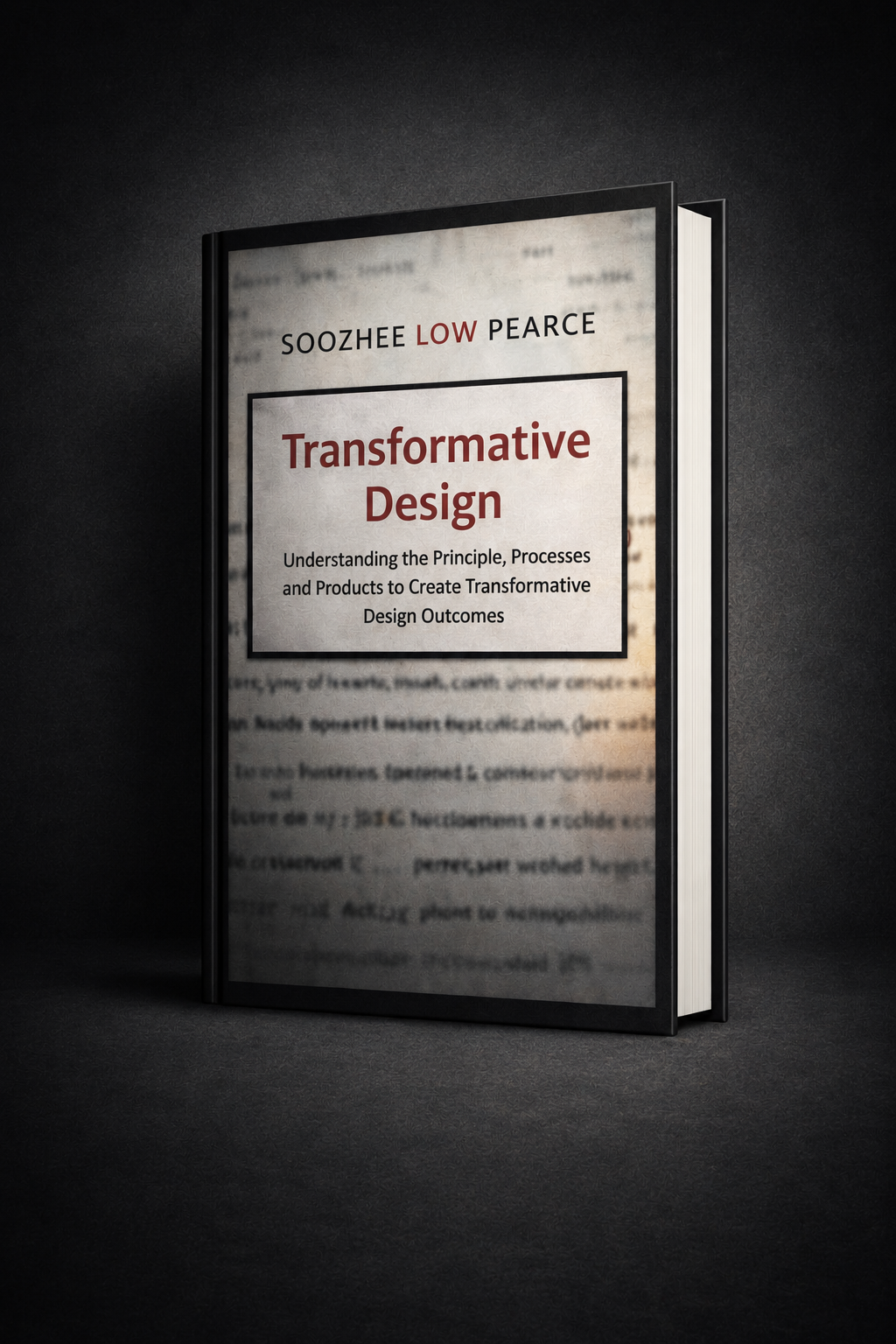
Transformative Design
What is Transformative Design?
Transformative Design is the structured process of moving from one defined state (State A) to another (State B) by bridging the gap through a defined transformation point.
Transformation is happening whether you understand it or not. This work shows you how it actually works.
An exploration of transformation as principle, process, and outcome. Presented exactly as it was originally published in 2008.
This work defines how transformation actually occurs — as a structured, repeatable process.
Orientation
Transformative Design is not a guide, a course, or a framework designed for quick application.
It is a structured exploration of how transformation works — how thought forms, how systems shift, and how design operates beyond surface change.
It defines how transformation moves between states and how that movement can be recognised and designed.
The work is process-driven, restrained, and deliberately focused on the study of recognising transformation in society, products, and thinking.
It will not guide you step-by-step. But it will show you how transformation moves — and how to recognise it.
Structure: 5 chapters, including principles, processes, and 12 case studies
Format: Master of Design thesis (2008)
Why This Work Still Matters
Much of what is now described as “transformative thinking” did not yet have language in 2008.
This work articulated transformation before it became a trend, and without relying on technologies, tools, or predictions that date quickly.
It is formed through articulating, studying, and distilling the principle of transformation — so that designers are better able to recognise what transformation looks like and embed the thinking and elements required to support transformative design outcomes.
This work provides a clear definition of transformation before it became widely interpreted or simplified.
What This Work Is
This is not a guide, a course, or a framework designed for quick application.
It is a structured reference study.
It examines transformation as a condition, a process, and an outcome.
It defines how transformation moves between states and how that movement can be designed.
Connections are made carefully for the purpose of transformation being applied into physical outcomes.
Transformative Design is defined here as the movement from State A to State B, not simply the idea of change.
What You Will NOT Find Here
- No simplified frameworks
- No generalised step-by-step instructions
- No quick application
Who This Is For
This work is for those who are no longer satisfied with surface-level explanations of change.
- designers and architects
- postgraduate and doctoral students
- researchers and educators
- systems thinkers
- practitioners seeking a grounded understanding of transformation
Inside the Work
- Transformation understood as movement between defined states, not just an outcome
- The distinction between change, redistribution, and true transformation
- A way of seeing transformation clearly, rather than assuming it
Structure of the Work
- Transformative Design — Principles
Understanding transformation as a condition and a way of thinking - Transformative Design — Processes
A six-step transformative process grounded in observation of transformation applied - Transformative Design — Products
Twelve in-depth case studies examining transformation across objects, systems, and contexts
Selected Pages
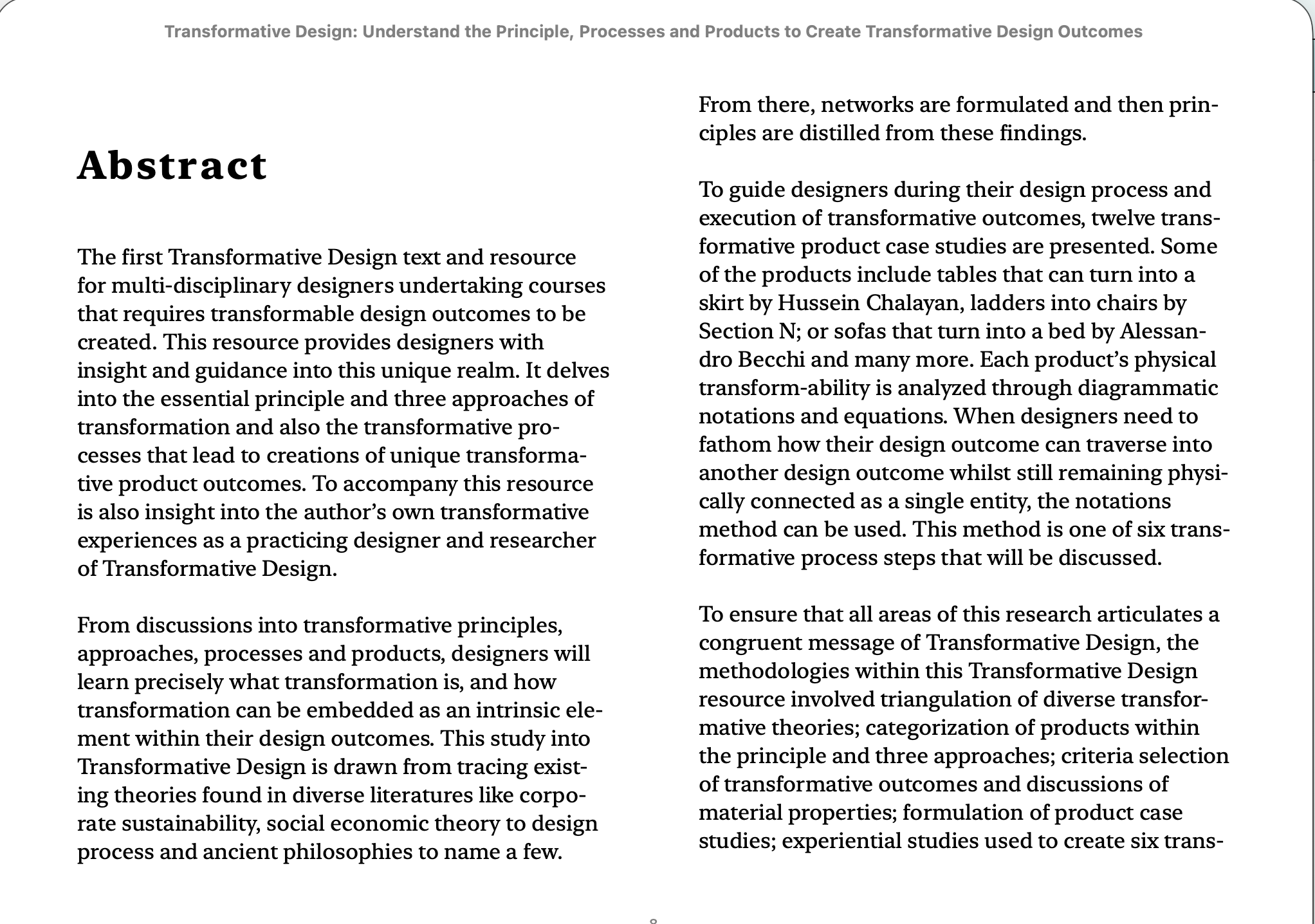
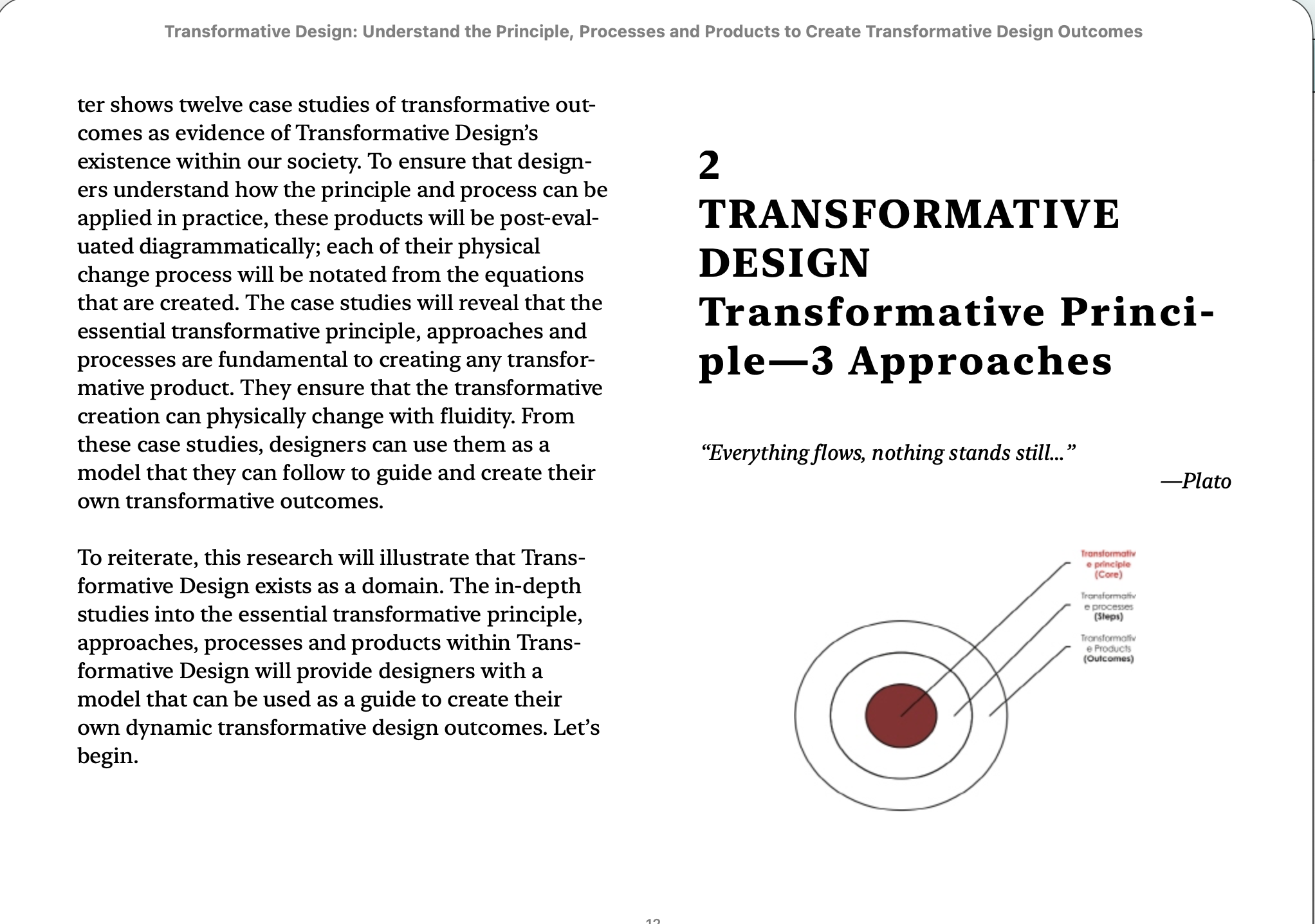
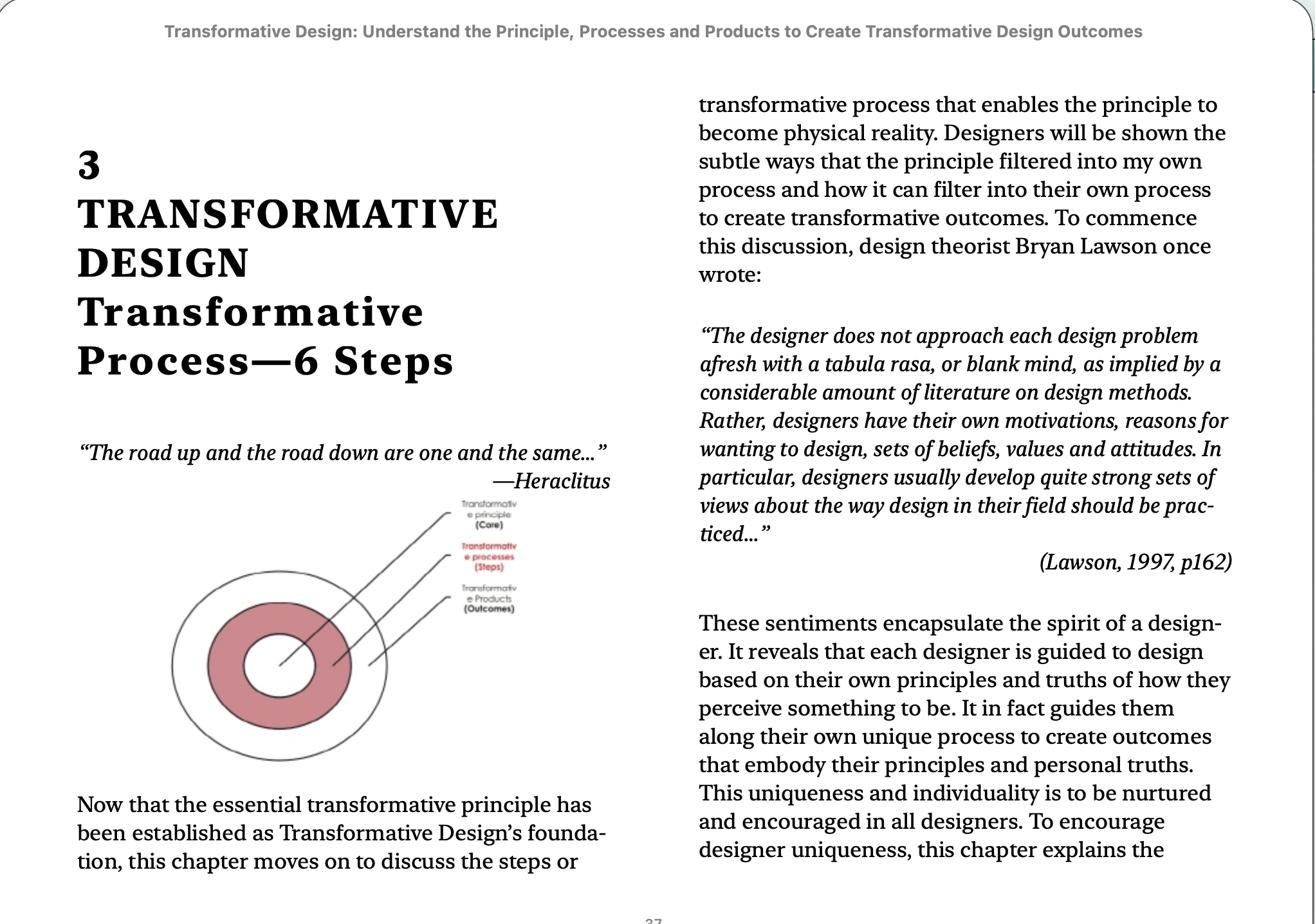
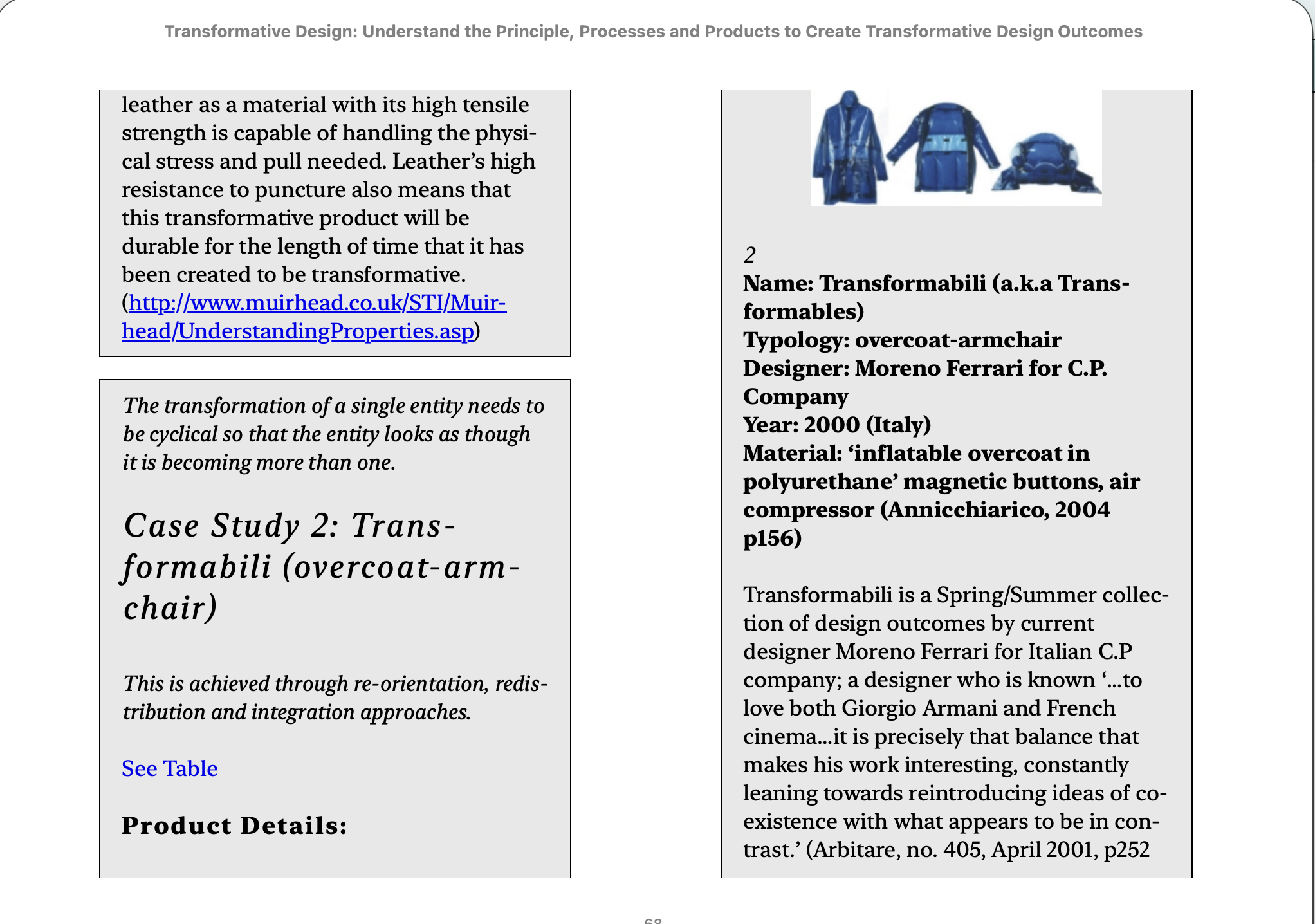
A small preview of the work in its original structure and layout.
Provenance
This work was originally developed within a Master of Design (2008) and later published in its current form.
Since publication, it has been distributed internationally and cited across architectural and academic contexts.
It continues to be accessed as an industry reference text.